


My wife is due in June. Our first kid. I’ve spent the last five months reading skimming baby books that contradict each other on every single page and waking up in a cold sweat at 2am about things I can’t control.
Somewhere between “which stroller folds with one hand” and “do we really need a wipe warmer”, I fell down a rabbit hole on a piece of legislation that, I swear on everything I own, will hand my unborn child a thousand dollars before they’ve taken a single breath outside the womb.
A thousand bucks. For being born. In America. Between 2025 and 2028.

The One Big Beautiful Bill Act. That is the actual name. Congress passed the most significant tax overhaul since the Reagan era, named it like it was a fragrance by Donald Trump, and signed it into law on the Fourth of July because of course they did.
(I should note: I am not here to litigate the politics. I’m here because I read the whole thing, all of it, and 95% of the people who will be affected by this law have not. Including, probably, the people who voted for it.)
Here’s what you need to know. Six moves. The ones that will actually change your financial life in 2026. Think of this as the cheat sheet your accountant hasn’t built yet.
Let’s go.
1. The SALT Cap Just Quadrupled (But There’s a Trap Door)
If you live in New York, New Jersey, or Connecticut, the SALT cap has been your nemesis since 2017. You could only deduct $10,000 of state and local taxes on your federal return. For anyone paying NYC income tax plus property taxes, you blew past that number before Valentine’s Day.
The new cap is $40,000.
Which sounds incredible until you read the fine print. And you should always read the fine print.
If your household income exceeds $500,000, the $40,000 cap starts shrinking. By $606,000, you’re back to the old $10,000 limit.
So for a dual-income professional household in Brooklyn or Westchester pulling north of $500K, the relief is real but less dramatic than the headline suggests. For households in the $200K to $500K range? This is a straightforward, meaningful tax cut. Real money.
The move for business owners: If you operate through an S-corp or LLC, the Pass-Through Entity Tax (PTET) election still lets you bypass the SALT cap entirely. Your business pays the state tax at the entity level, deducts it before the income flows to you, and the cap never touches it. Congress explicitly preserved this workaround. They could have killed it. They didn’t. Take the hint.
2. Trump Accounts: A $1,000 Gift From Uncle Sam to Your Newborn
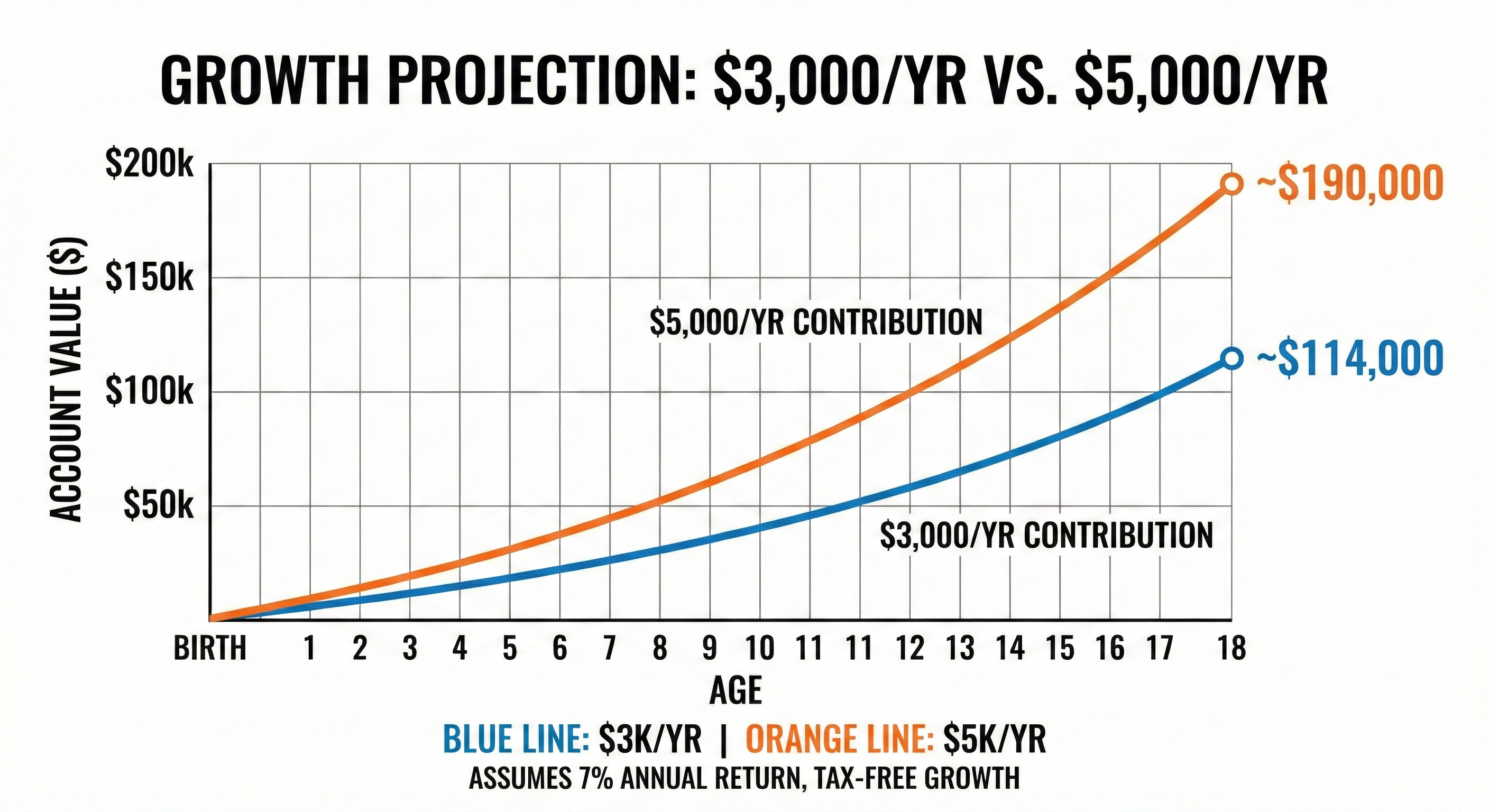
On July 4, 2026, roughly three weeks after my kid is supposed to arrive, a brand new type of tax-advantaged savings account goes live. Every U.S. citizen born between 2025 and 2028 gets a $1,000 federal deposit. You can then contribute up to $5,000 per year. The money grows tax-free. At age 18, it converts into an IRA.
I’ll save you the political commentary. Here’s what matters: the math is stupid good.
$5,000/year from birth to age 18 at a 7% return ≈ $190,000. Tax-free growth. Then it rolls into an IRA and compounds for another 40+ years.
We’re talking about potentially setting up a million-dollar retirement account for your child before they’ve picked a college major. Before they’ve had their first job. Before they’ve ever Googled “what is a Roth IRA” at midnight like the rest of us did.
The even savvier play: employers can contribute up to $2,500 per year to an employee’s child’s Trump Account on a tax-favored basis. If you run a business, this is one of the stickiest retention benefits you can offer. You’re not just paying someone. You’re investing in their kid’s future. Good luck poaching that employee.
For our clients with newborns or kids on the way, we’ll be setting these up the day they go live. Consider the paperwork already in the queue.
3. No Tax on Overtime (Kinda)
This one sounds like a campaign bumper sticker that would never actually become law.
It did.
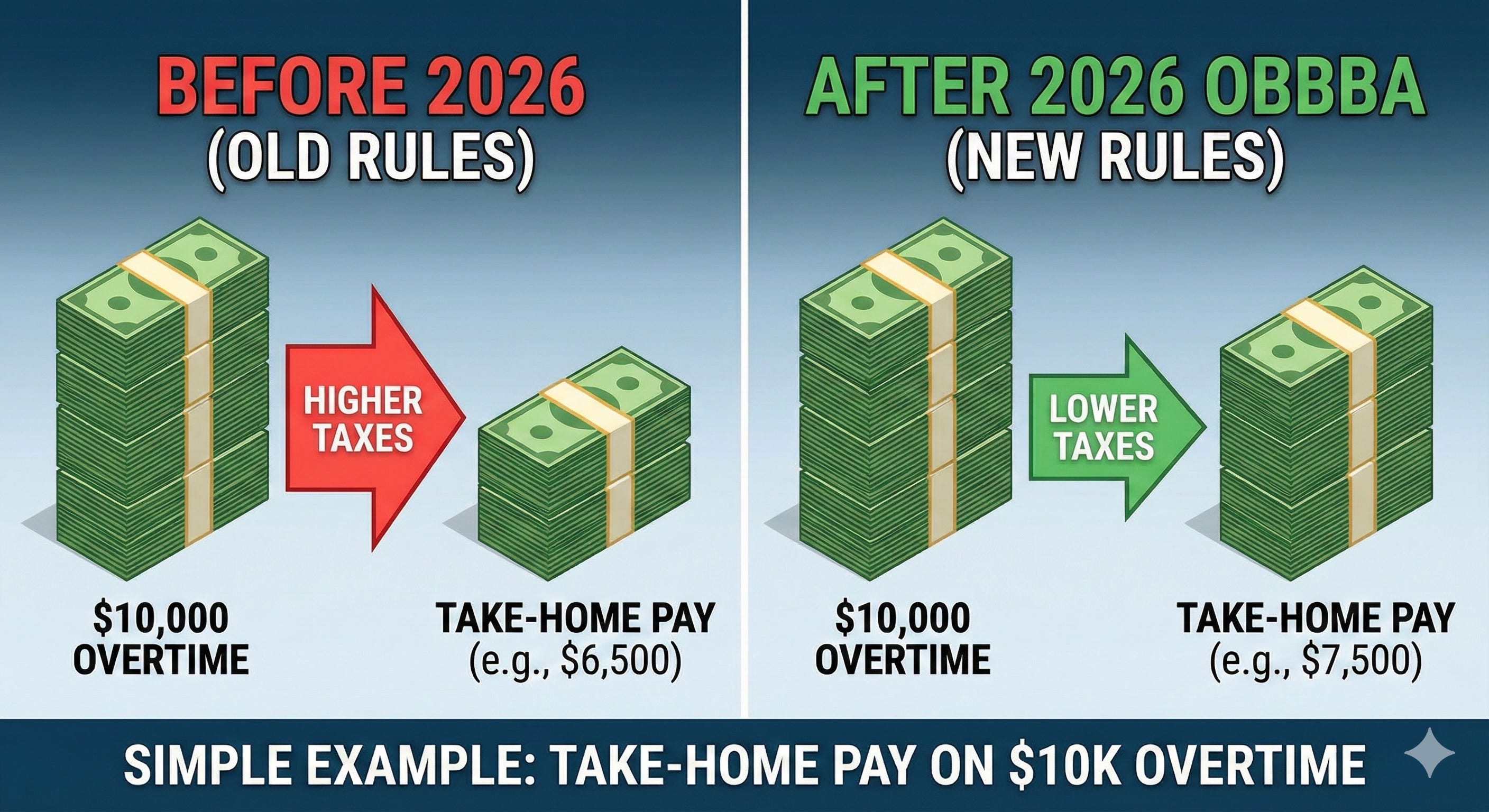
Starting in 2026, the premium portion of your overtime pay (the “half” in time-and-a-half) is deductible up to $12,500 for individuals or $25,000 for joint filers. If you’re a nurse pulling doubles, an engineer logging 55-hour weeks, or anyone earning FLSA-mandated overtime, this is found money.
The catch (there is always a catch): your employer has to separately report qualified overtime compensation on your W-2. If their payroll system can’t distinguish between FLSA overtime and other types of premium pay, you can’t claim the deduction.
The law is there. The infrastructure isn’t always.
If you’re an employer reading this: getting your payroll system right on this isn’t just compliance. It’s a recruiting tool. “Your overtime is worth more here” is a hell of a pitch in a tight labor market.
4. 100% Bonus Depreciation Is Permanent 🏗️
For the business owners in the room. This is the headliner.
Under the old rules, bonus depreciation was on life support. Scheduled to drop to 20% in 2026 and flatline entirely in 2027. The new law brought it back to 100% and made it permanent. Every dollar you spend on qualifying equipment or technology can be written off immediately. Not over five years. Not over seven. Now.
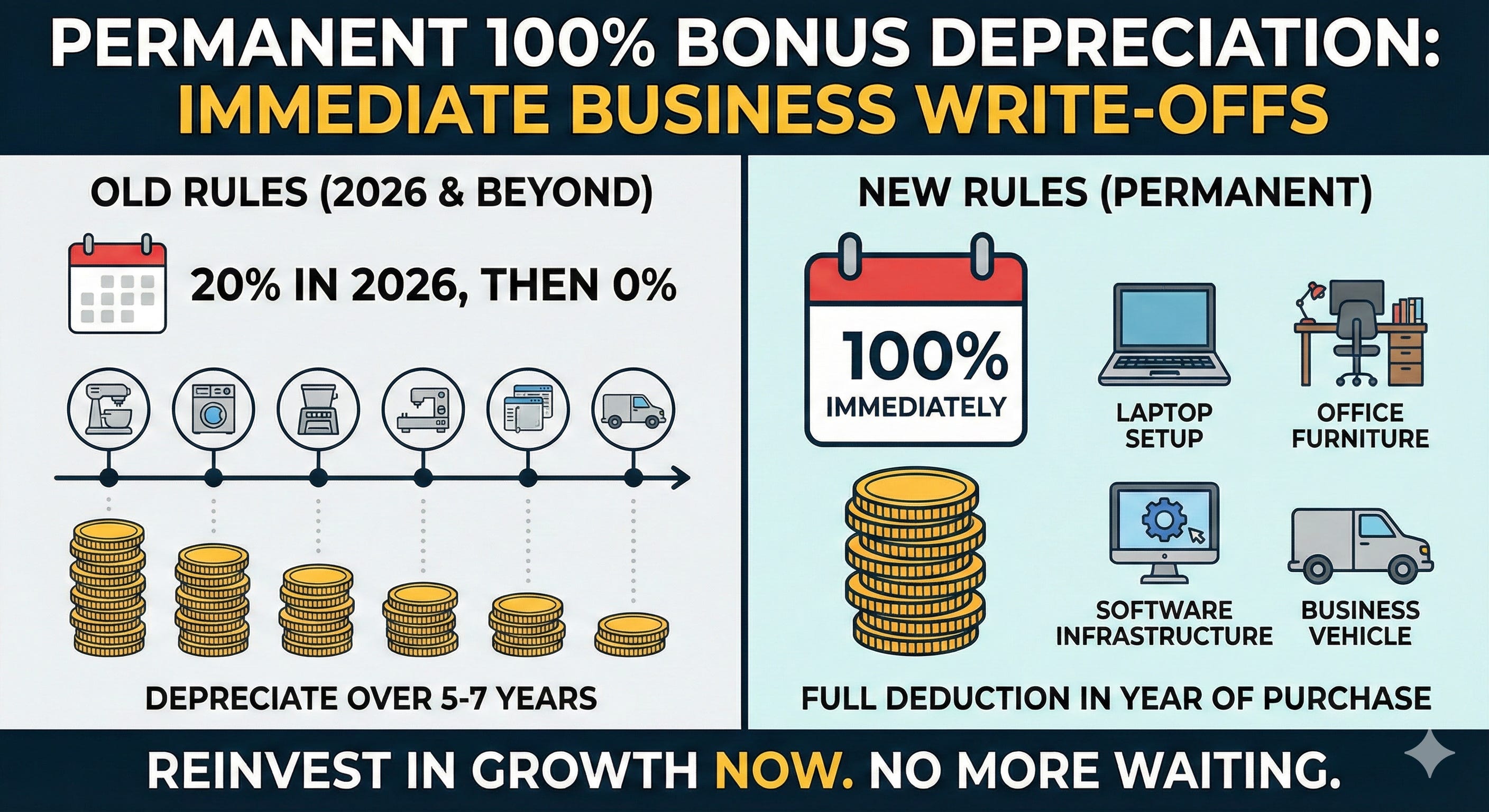
Let me make this tangible. Say you run a growing practice or a small firm and you need to upgrade your team’s laptops, buy new office furniture, invest in better software infrastructure, or lease a vehicle for the business. Under the old phase-out, you’d only write off 20% of those costs this year and depreciate the rest over time. Under the new rules, 100% of it hits your return in the year you buy it.
That $8,000 MacBook Pro setup for your new hire? Full write-off. The $30,000 office buildout you’ve been putting off because the timing never felt right? Done. Year one.
Savvy hack: $1 Macbook Leases. Spread the payments over 36 months, but write off the full cost immediately.
And that’s the part nobody’s talking about. The permanence changes how you think, not just how you file. You can time purchases around when your business actually needs them instead of when the tax code forces your hand. Need new equipment in March? Buy it in March. The deduction will be there whenever you’re ready.
For a small business owner doing $500K to $2M in revenue, the difference between expensing a purchase immediately and depreciating it over five years is real cash flow. It’s the difference between reinvesting in growth this quarter and waiting until next year.
5. The S-Corp Is Still The Cool Kid (For Now)
The question isn’t “S-corp or C-corp?” anymore. It’s “What are you building, and what does the exit look like?”
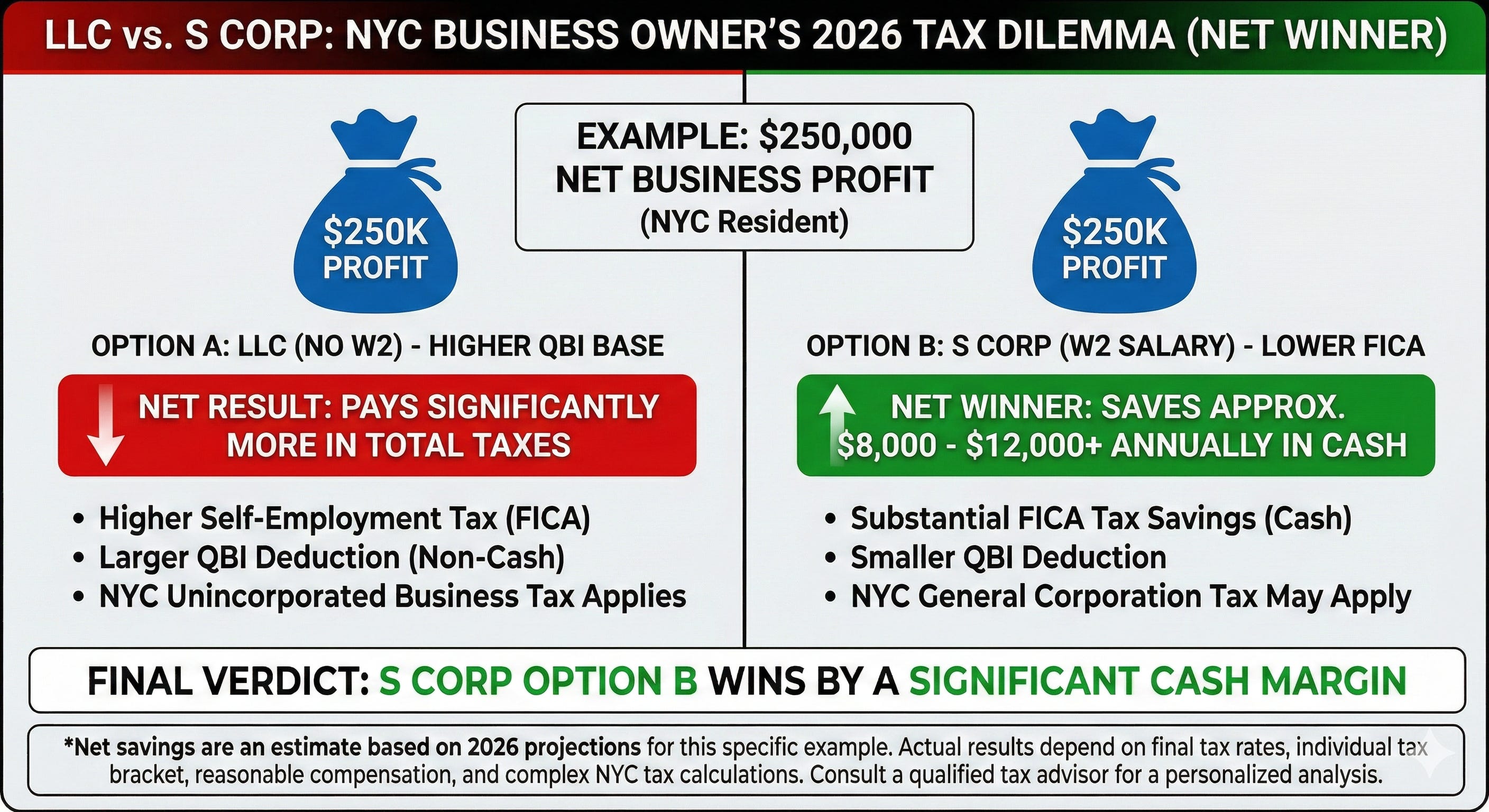
If your answer is “I’m running a profitable services business and I want to minimize current-year taxes,” the S-corp with QBI is still your friend. If your answer is “I’m building something I plan to sell for a multiple of revenue in three to seven years,” the C-corp with QSBS should be on your radar immediately.
The 20% QBI deduction phase-in thresholds just expanded significantly. In 2025, joint filers started losing the deduction at $394,600 of income. In 2026, that number jumps to $403,500, and the phase-in window widens from $100,000 to $150,000. Translation: more doctors, lawyers, and consultants get to keep at least a partial deduction as their income grows.
This is the kind of decision that costs people six or seven figures when they get it wrong. And most people don’t think about entity selection until it’s too late to change it cleanly.
Something interesting to note: the OBBBA just made C-corporations the most interesting entity choice for high-growth businesses in a way that hasn’t been true in decades. The reason has a name: Section 1202. Qualified Small Business Stock. QSBS.
If you start or invest in a qualifying C-corp and hold the stock long enough, you can exclude a massive chunk of your capital gains when you eventually sell. We’re talking up to the greater of $15 million or 10x your cost basis.
6. The Charitable Giving Shakeup Nobody’s Talking About
Here’s a weird one that might matter more than you think.
Starting in 2026, if you take the standard deduction, you can deduct up to $1,000 ($2,000 for couples) in cash charitable contributions above the line. That’s new. That’s good for a lot of people.
But if you itemize? There’s a new floor. Only contributions exceeding 0.5% of your AGI are deductible. So if your adjusted gross income is $400,000, your first $2,000 in charitable giving doesn’t count for tax purposes.
This creates a massive incentive for what we call “bunching”: concentrate two or three years of giving into a single year to clear the floor and maximize the deduction, then take the standard deduction in off years.
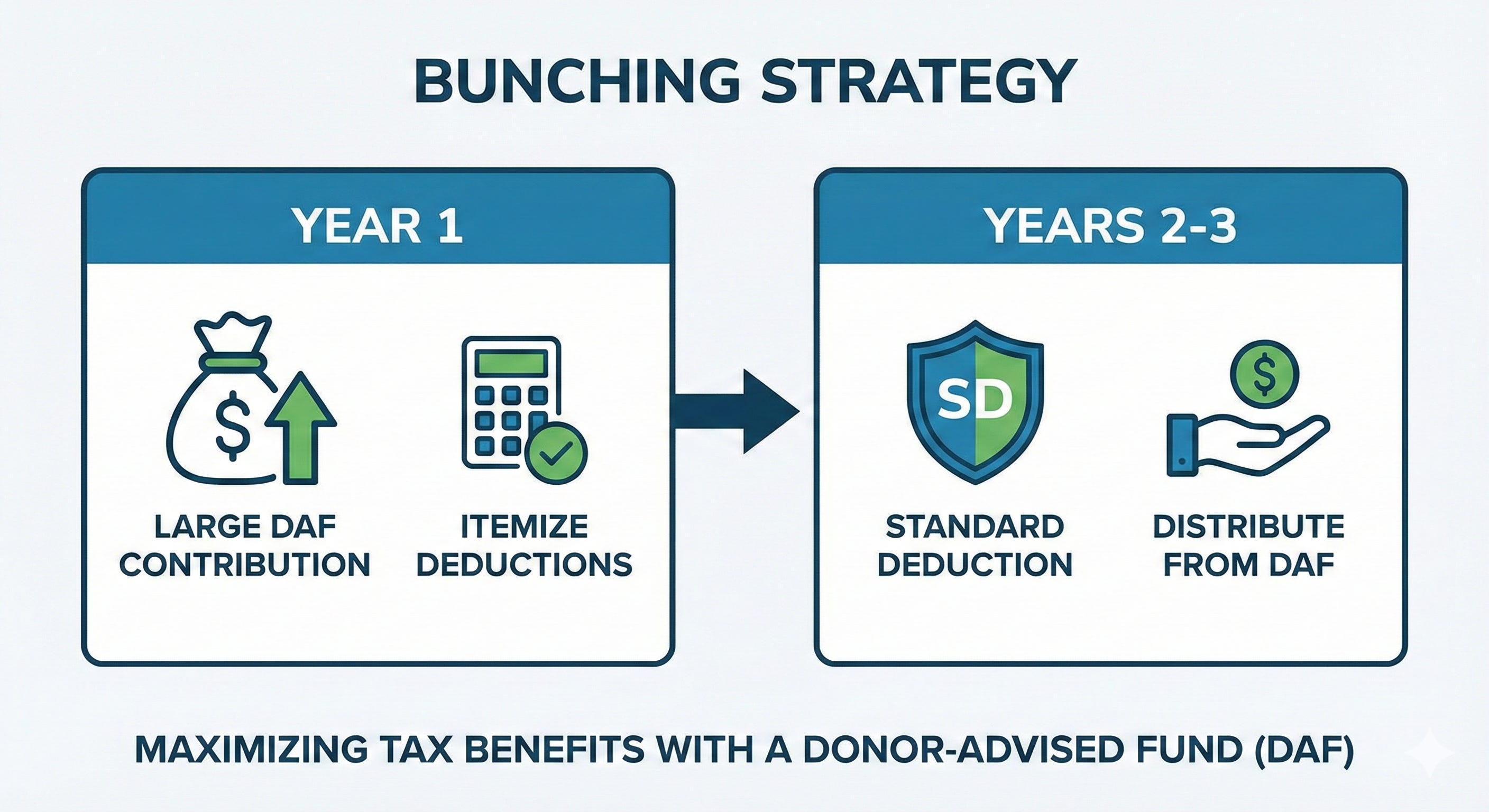
The cleanest vehicle for this? A Donor-Advised Fund (DAF). You make a large contribution to the DAF in year one, take the full deduction, and then distribute the money to your favorite charities over the next several years at your own pace. The tax benefit hits immediately. The giving happens on your schedule.
If you’re already charitably inclined and haven’t set up a DAF, 2026 is the year. This isn’t aggressive tax planning. It’s just math.
So What Does All of This Actually Mean?
Here’s where I’m supposed to tie it all together with some sweeping statement about the future of American tax policy. I’m not going to do that. Partly because nobody actually knows how this plays out over ten years. Partly because I think the more honest thing to say is this:
Most people will sleepwalk through the biggest tax overhaul of their adult lives.
They’ll hear “Trump Accounts” at a barbecue, nod, and never open one. They’ll keep filing the same way they’ve always filed because changing something feels risky even when not changing is the actual risk. They’ll leave the PTET election on the table because nobody explained it in plain English. They’ll bunch nothing. They’ll optimize nothing. And they’ll pay more in taxes than they needed to, every single year, for the rest of the decade.
That doesn’t have to be you.
I keep thinking about my kid. (I think about my kid a lot these days, which I’m told is only going to intensify.) They’ll be born into a world where their parents already have a plan for the account that launches three weeks later. Where dad’s business is structured to capture every deduction the new code offers. Where the SALT strategy and the charitable bunching and the entity election have already been modeled and optimized.
I don’t know if this kid will care about any of this stuff someday. I don’t know if they’ll be into finance or sports cards or something I can’t even imagine yet. Maybe they’ll be a poet or a carpenter or one of those people who lives in a van and is somehow happier than everyone I know. Whatever. I can’t control that.
What I can control is whether someone was paying attention to the details while they were too young to do it themselves.
That’s the job. That’s always been the job.
And right now, in 2026, with this much changing this fast? It’s never mattered more.
Iconoclastic Capital Management is an SEC-registered investment adviser. This content is for informational purposes only and does not constitute tax advice. Please consult a qualified tax professional regarding your specific situation.