


In This Post
The social awkwardness nobody’s talking about and advisors with the data hygiene of a toddler eating sand
The microwave vs. chef problem
A term I’m coining that the industry deserves
The four things we’ll never hand to a machine
We have been using our AI meeting notetaker, IconoBot 🤖, for almost two years now. It has given us thousands of hours back previously spent on data entry that we can now give to our clients.
However, a recent trend I’m noticing is when we speak with a new client there is an increasing level of disdain for the technology if we don’t warn them properly ahead of time.
I can see it on their faces, an uncomfortable shift towards discomfort they have to contend with in real time.
If your big efficiency gain means a client talks to a chatbot instead of their advisor, you haven’t gotten more efficient. You’ve gotten worse.
It’s a strange new world we’re all trying to dance around together. The technology itself a tectonic shift, sure. But I would argue that navigating the social complexities of it being thrust into our relationships is even bigger.
Listen, I get it, the pressure to say something about AI right now is enormous. But so much of the conversation around it is, to put it politely, theater.
To put it even more politely, it’s so fucking annoying.
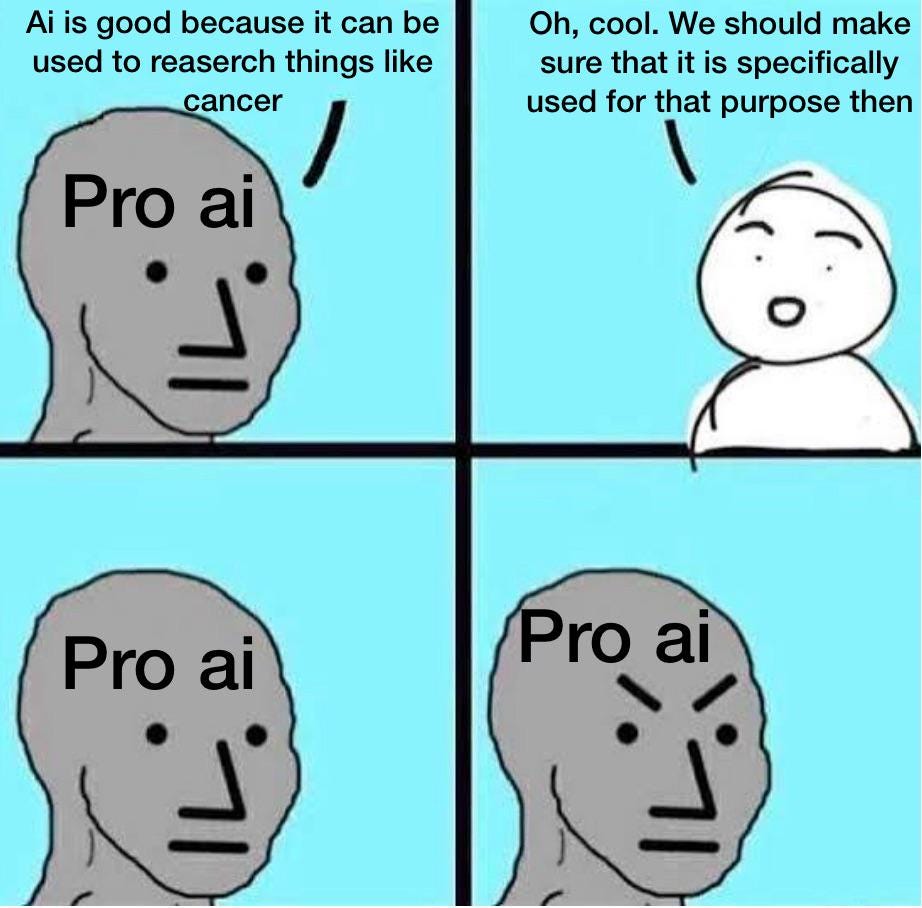
So I’d like to take the opposite approach of everyone else in the world and talk about fun ways we’re NOT using AI right now.
Most of what I’m seeing right now in financial services is concerning:
Advisors sneaking onto the free version of ChatGPT on their lunch break, typing client scenarios into a consumer chatbot with the data hygiene of a toddler eating sand.
No enterprise agreement. No compliance review. No archiving. Just vibes.
Advisors at major firms pasting client tax situations into a tool that OpenAI is absolutely using to train its next model, and their compliance departments would have a collective stroke if they found out.
The reason we adopted AI has nothing to do with AI. We've always been borderline neurotic about being unreasonably prepared for every client interaction.
The Microwave vs. The Chef Problem
I want you to picture two kitchens.
In kitchen number one, there’s a guy reheating leftover Olive Garden in a microwave. He hits the popcorn button because he can’t be bothered to figure out the actual cook time. The plate comes out scorching on the edges and frozen in the middle. He posts on Instagram Stories: “Cooking Italian tonight 🧑🏻🍳 .” Technically not a lie.
In kitchen number two, there’s someone who spent years learning knife skills, who understands why you deglaze a pan, who can taste a sauce and know what’s missing. They’re using the same basic technology as the microwave guy (heat + food = dinner) but the intent, the skill, the outcome? Completely different universes.
That’s AI adoption in financial services right now. There are chefs, and there are people pressing the popcorn button.

I know advisors at big box firms who think they’re on the cutting edge because their meeting notetaker generates a summary after client calls. And they talk about it at like they just split the atom. “It even creates action items!” Yeah man, so does a legal pad.
And here’s the part that makes me want to flip a table: according to recent industry data, only about 5% of investment adviser firms are using AI for anything client-facing, while roughly 40% have adopted it for internal use. For most of those firms, “internal use” means Microsoft Copilot. That’s it. That’s the whole menu.
Not because Copilot is the best tool for the job. Because it’s the only one their compliance department will approve.
The Dirty Secret
I want to coin a term here, because I think we need one: AI Cosplay.
AI Cosplay is when a firm or person dresses up in the costume of technological sophistication without actually changing anything.
They’re either lying about AI agents making them $100,000 in a month, thus not changing their identity as a loser who lies for clicks.
Or, they’re creating efficiencies for efficiency’s sake, without any purpose toward why they need more free time.
The firms getting real value from AI aren't the ones with the biggest voices. They just asked themselves a boring question: where are we wasting time that should be going to our clients?"
That’s it. That’s the whole framework.
Every hour we used to spend on data entry, report formatting, or hunting through tax code was an hour we weren’t spending on the thing you actually pay us for. Which is judgment. Experience. The ability to look at your full financial picture and say 'here's what I'd do, and here's why.' Not just spit back the textbook answer, but know which answer actually matters for your life.
AI gave us those hours back. What we do with them is on us.
Things We Refuse to Use AI For
When we send you something that matters, a human who gives a shit wrote it.
We don’t use AI to make financial planning recommendations.
When the market drops 15% in a week and you call us, you’re not looking for a chatbot to recite the likelihood of a recovery in 18 months. You’re looking for someone who knows that your daughter starts college in two years, that you just refinanced, and that the last time this happened you almost panic-sold your entire portfolio at the bottom.
AI can model the breakeven age on your Social Security decision. What it can’t do is sit across from you and watch your face change when we talk about what retirement actually looks like versus what you think it looks like.
It doesn’t know whether you actually like your job or you’re white-knuckling it to some finish line you set in your head ten years ago.
Claude could probably pass the CFP exam with a perfect score right now. That should tell you more about the limitations of standardized testing than it does about whether software should manage your money.
The job was never knowing the answers. It's knowing which answers matter for you.
We will never use AI to fake scale.
Some firms are using AI to manage more clients with fewer humans and calling it “efficiency.” If your big efficiency gain means a client talks to a chatbot instead of their advisor, you haven’t gotten more efficient. You’ve gotten worse.
That’s like a restaurant replacing the chef with a vending machine and bragging about their improved margins. You might be saving money, but nobody’s coming back for seconds.
We'd rather serve fewer families well than more families poorly. We use AI to go deeper with the people who trust us. Not wider.

We will never use it to write from the heart.
Yes, there are blogs I will write or social media posts I make that are mostly AI generated. As a business owner, I have a responsibility to my team and clients to use the available tools in front of me to grow our firm as best I can. Nobody benefits from us going out of business from being stubborn.
But if I’m writing something like this post, or any sort of communication that requires empathy I’m doing it the ol’ fashioned way. When we send you something that matters, a human who gives a shit wrote it.
There’s also a version of every client email that AI can draft. It’ll be clear, professional, grammatically perfect, and feel gross when you read it.
The hard part of telling a client their plan needs to change isn’t finding the right words. It’s knowing whether this person needs the blunt version or the gentle version. Whether they want to be told what to do or need to arrive at the conclusion themselves.
We will never use it to put your information at risk.
Remember those advisors I mentioned pasting client tax returns into the free version of ChatGPT? That’s not a hypothetical. It’s happening right now across the industry. The SEC considers AI-generated communications to be business records, which means firms are responsible for capturing, retaining, and supervising every interaction. Nearly half of compliance departments haven’t even set up formal testing for AI outputs yet.
We use enterprise-grade tools with proper data guardrails. Your information doesn’t train a public model. It doesn’t get stored on a server we don’t control. This shouldn’t be a differentiator. It should be table stakes. But right now, it’s not, and that’s a problem the rest of the industry needs to figure out fast.
So Where Does That Leave Us?
AI is a massive fork in the road. You can use it to cosplay innovation while cutting corners. You can resist it and fall behind. Or you can use it the way we do, which is as a tool to fuel an obsession with being great for the people who trust us.
We want to be better for you. That's it. Not faster. Not cheaper. Not more 'innovative.' Just better.
AI helps us do that, so we use it. The day it stops, we stop. Pretty simple.
Iconoclastic Capital Management LLC is a SEC Registered fee-only RIA firm. This content is provided for informational purposes only and should not be relied upon as professional advice.